MØMCX

Amateur Radio Operator


ToolFellows, my cool new Handyman service

Never one to stand still, I’ve created a new business called Tool Fellows Ltd. See it in action here:

TEST

http://www.toolfellows.co.uk/


September 16th, 2011 Posted by admin | Amateur Radio | no comments

2010 Harley Fat Boy - My first review

Finally, I managed to clear my diary and take my 2010 Fat Boy out for a decent run. Since taking collection about a month ago, I’ve been restricted to half an hour here and half an hour there.

Yesterday, the hottest day of the year so far (and boy, didn’t I know it) I took Fat Boy from Dorridge, down the old A34, through Stratford and on towards Chipping Campden and finally to Etherington to meet up with an old friend at his house. John has a “G reg” 1200 Sportster and I was amazed at the difference in size between a modern Fat Boy and the older 1200’s with their skinny little tyres. As John put, he sit’s “on” his bike, whereas he considered that I sat “in” mine.

After a mug of tea and some idle chit-chat, I got on my way again, setting out for home. The longer than normal ride there and back, gave me a taste for my stock handle-bar set-up which I had adjusted the previous night, pushing the bars forward by about two inches. Maybe the previous owner had adjusted them back a long way but they finally felt just nice. I’ve been thinking about making the investment in some 16 inch Apes and frankly, now that I’ve had two hours in the saddle, I’m not so sure I’d be doing the right thing. My problem is that I’m after a “look”. So I may have to sacrifice comfort for my daft ego.

In terms of performance, I’m really happy with the pulling power of these 1584cc engines. I have the stage 1 kit with Vance and Hines Big Radius exhausts, not only do they sound awesome, but she pulls like a train. I love the sound when I open her up and the revs are holding her back a tad. I thought about trying to describe the sound of a big twin on the written page. I gave up!

Handling is better than expected, although for some reason, I’m still anxious over right handers, particularly slower speeds like Stonebridge Island for instance. I’m wary and feel that I’m somehow on a knife-edge. Is this because the bike’s unbalanced now that we took the stock exhausts off? I’m hoping this is mostly in my head since I seem to be getting over it slowly. Fast right-handers are fine.

I’ll leave you with a thought. In the main, machines take the feminine form, therefore trains, ships, cars and bikes are referred to as “she” but my Fat Boy seems a wee bit too boyish to be called a “she”. Do I persevere and continue down the “she” line or come up with a new form? Jury’s out :)

June 27th, 2011 Posted by admin | Amateur Radio | no comments

Harley Fat Boy Stage One Vance Hines Big Radius - bike pulls to left?

I’ve had loads of  biggish bikes over the years and most of them never run true due to shot head gear and bearings etc. Finally, I get my newish Fat Boy but there’s a distinct drift to the left which has annoyed me.
I just realised that the stock exhausts are quite heavy. The dealership stripped these off and fitted a Stage One with Vance Hines Big Radius (I think) for me before delivery, so I can’t compare. Now I happened to move the box with the stock exhausts tonight and thought, “woah, heavy”.

Then the penny dropped. By adjusting my fat arse on the seat, I can simulate approximately how heavy these exhausts are, and as if by magic, it cures the drift - but it’s too late. I can’t re-add the weight.

Is that it? Am I stuck with the drift? Let me know.

May 24th, 2011 Posted by admin | Amateur Radio | no comments

The Online Handbook circa 1984

In about 1984, I bought a book called “The Online Handbook”. The book showed me that there was a dark and strange world out there inside computers that connected to phone systems all over the world. I was given a 300 baud modem and used to log into these strange computer systems in the middle of the night, leaving messages for even stranger people.

In 1988, I borrowed a 1,200 modem. I would log into my favourite BBS system but the modem had no error control so a squirt of static on the line would produce a load of “greek” (we used to call it) on the screen! It’s very funny, looking back! By 1989, I had bought an US Robotics HST 14,400 modem from the US. This rocketed me up to 14,400 baud (faster, I remember with a matching Sysop system?). It was illegal to connect this modem to the UK phone system because it didn’t have a “green sticker” but I did anyway with no harm to anyone. The damned thing was £500. A ton of money back then.

Anyway, I just saw a mate of mine pop up on Skype’s toolbar: “Ken Williams is online” and it reminded me of how I got into this odd world. Of course, in the old days, we would either be off-line or on-line. I introduced Wendy to my favourite BBS in 1994 (cix.co.uk) and calling the system was expensive, so we had software to log in, download all the new messages and then hang up. We called this “blinking”. I wonder if it was only the UK that “blinked”?
C.

April 13th, 2011 Posted by admin | Amateur Radio | no comments

The M0XXT Mega-Loop antenna - VHF gain for the HF bands

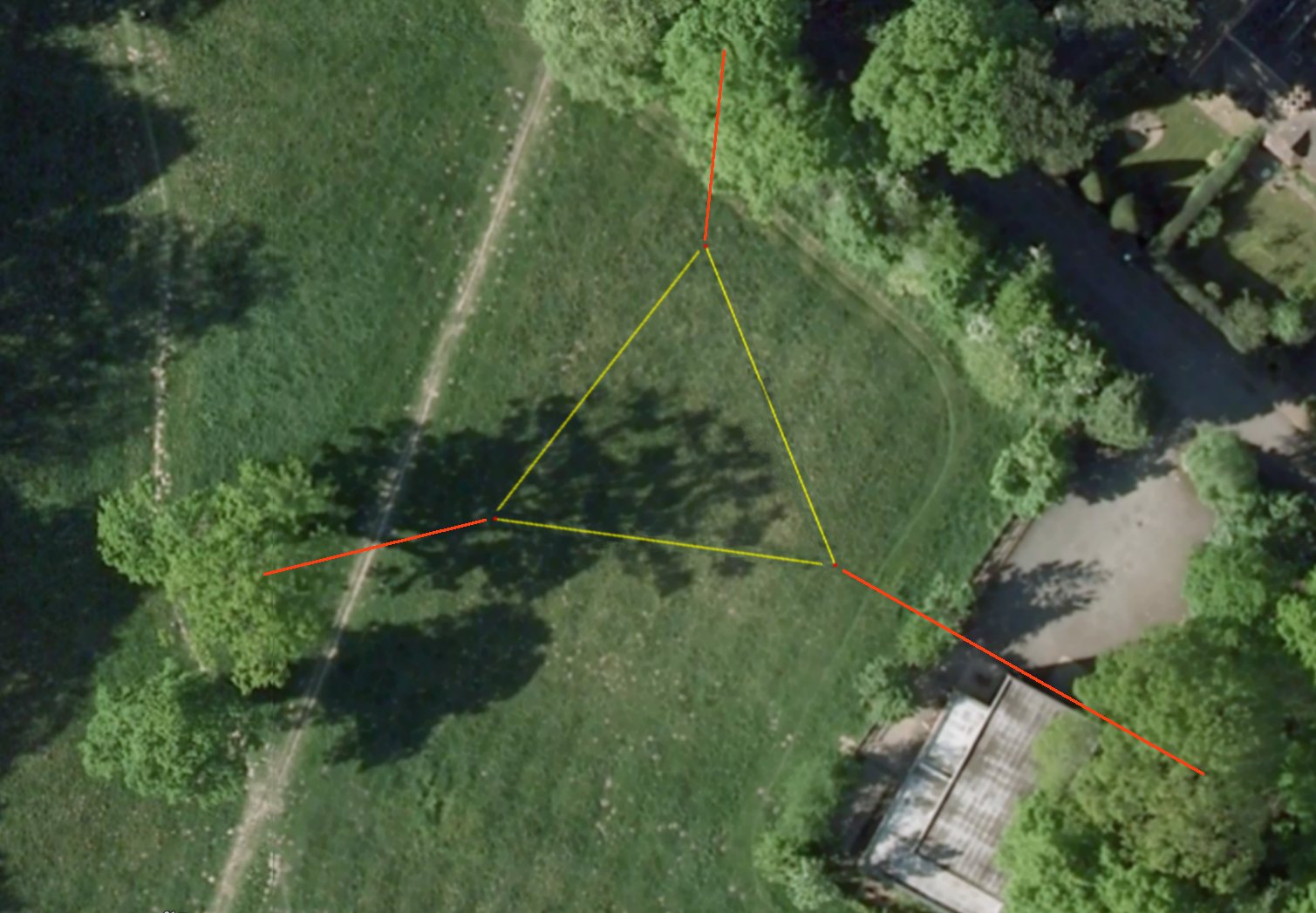
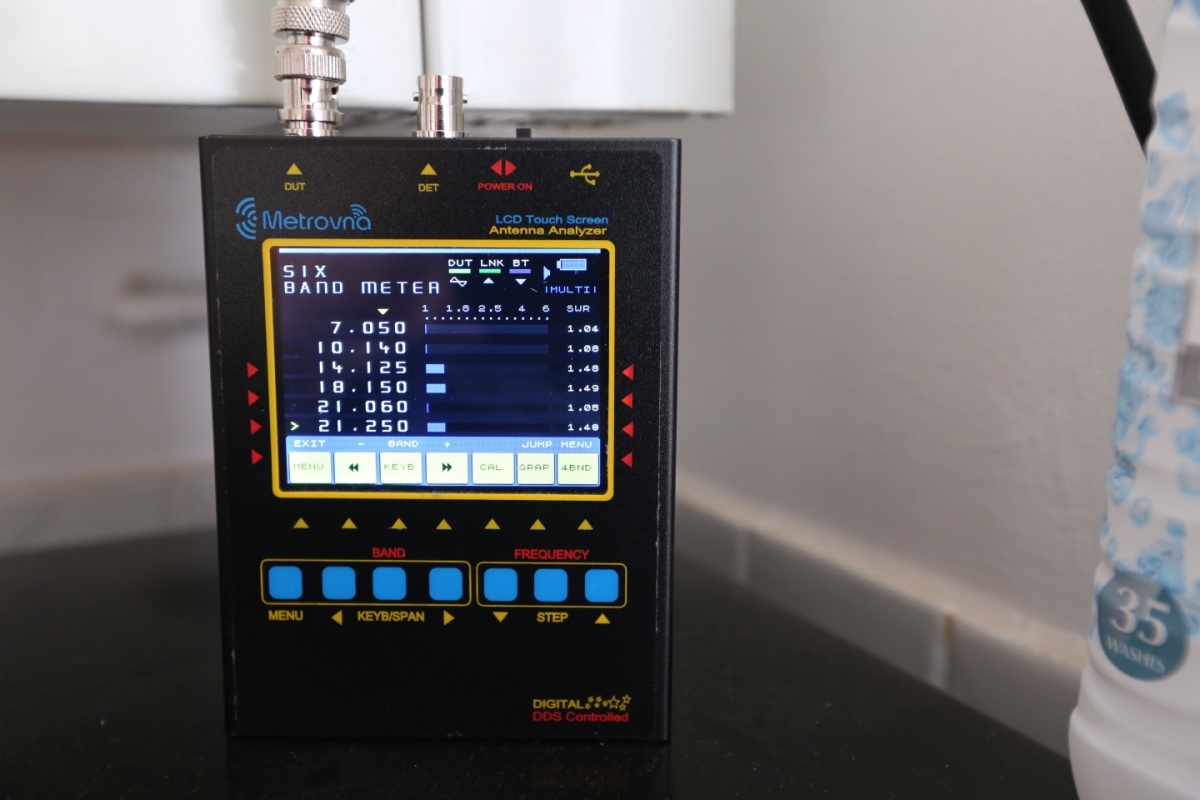
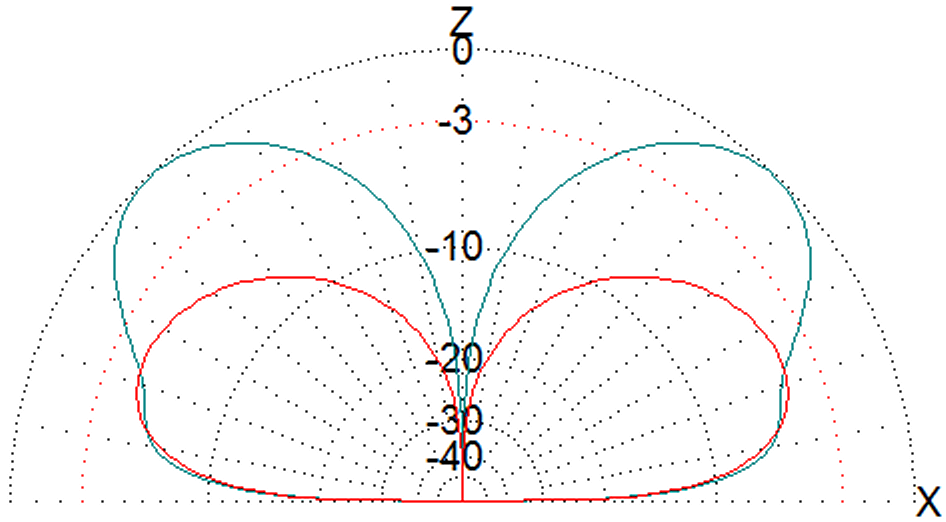
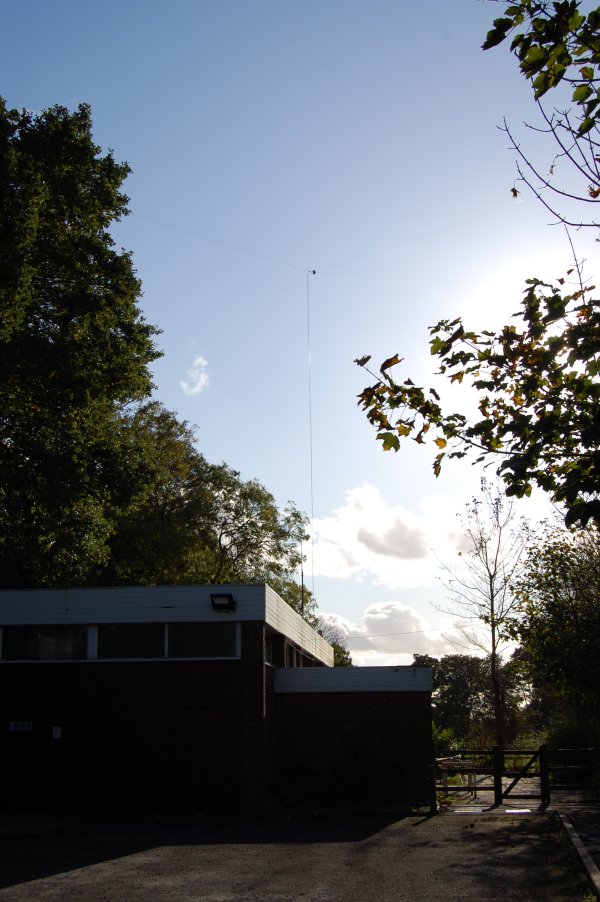
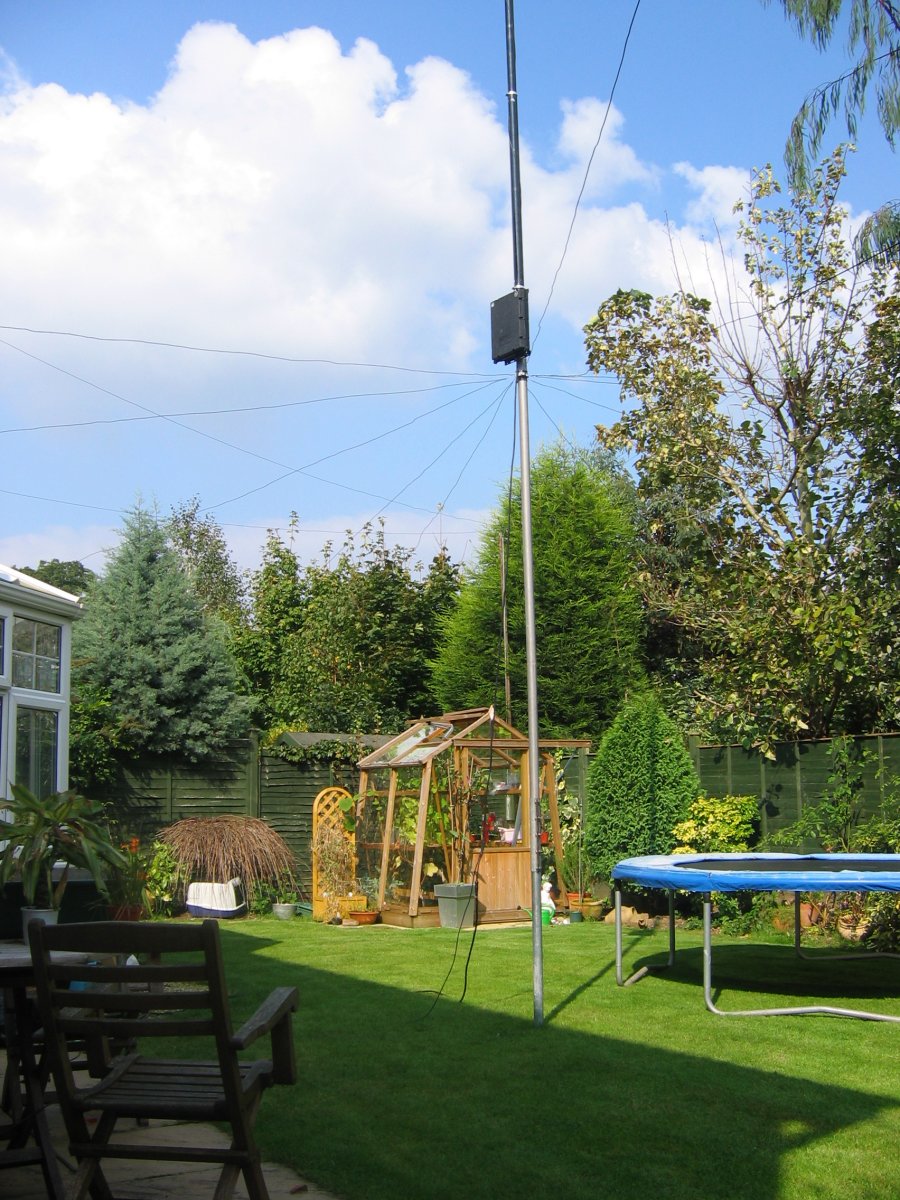
Many people ask me what our HF antenna is. It’s just a delta loop antenna (triangle) made from 2mm wire at about 58m per leg (174m perimeter) with a height above ground of around 60 to 80 feet (depending on tension) fed with coax to a 4:1 balun at the feedpoint in one corner. It is horizontal and strung between three large oak trees. The main RF gain is opposite the feedpoint. We achieve less than 2:1 across most of the ham bands. It even works for WARC bands too.
Over the last two years, we have had huge success with this antenna which tunes from 160m band right up to 6m (we’ve even used it on 2m and 70cms!). Originally, this design was for 80m perimeter but we extended it to twice the size on a whim and it worked even better. The plots that follow are now inaccurate. These are extremely conservative. Doubling the size makes the 20m plot look more like the 10m plot now.Go check the last picture below. It says 10m band but this is what we’re actually achieving on 20m. Isn’t that amazing? 10m is off the scale with less than 5% take-off angles.
I have held a pile up from Birmingham (UK) to West Coast of USA on 10w. Receiving 57 reports at that power. Running 400w delivers consistend 20dB over S9 reports in early eve, winter time.

XXT loop

20m loop

15m

10m XXT Loop

March 21st, 2011 Posted by admin | Amateur Radio | no comments

Power Over Ethernet - Buffalo G54 - WiFi Antenna

POEI found my old article recently regarding my home-brew Power Over Ethernet Project. James and will shortly be putting internet at the Scout Hut around one mile away and having my router as close to the antennas as possible will be mandatory. Here’s an old project that I wrote up in 2009:

Using very high quality coax from my vertical antenna to a router in the shack is a very expensive option due to the very high losses at 2.4 GHz. We could use Ecoflex 15, but at £6 per meter and £9 for a connector, it’s a bit rich for a kids experiement.

Better bet is to site the router on top of the mast right next to the antenna in a waterproof box, using just a tiny pig-tail of coax from the antenna directly to the router. Of course, you need power to the router which might mean sending 240v utility power up the mast to the little PSU that comes with the router. Not a good option, having mains dripping off a mast.

How about cutting the low voltage line from the router’s PSU and extending it so that you have just DC running up the mast instead of mains? You can, but why not use the spare data pairs in the CAT 5 spec instead. These are pins 4 & 5 and 7 & 8. Connect the pairs together to lower the resistance (Ohms Law).

Power Over Ethernet Buffalo G54Ignore the colours that I have used in my project, this was to make fault finding easy in the future; blue being the negative and orange for positive - although in typical amateur radio style, I got these muddled up so now they’re the wrong way around and I wish I had just used the normal colours for the data now! Grrr.

Cat 5 Wiring DiagramI made up a 20 meter run of Cat 5 and injected 3.3 V DC from the little PSU that came with the router and pulled it out at the router end, as per the picture. Initially it failed miserably since the voltage drop was too low. The PSU was rated at 3.3V DC and 2A. Essentially, once the Router tried to suck any power down the line, the voltage dropped like a stone and the router wouldn’t boot up.

Throwing caution to the wind, I cut the 3.3V PSU off and substituted a 7V DC PSU which was lying about. My multimeter is currently on the boat, so I just did some rough mental calculations and guessed that the voltage would drop by around half, giving me maybe about 3.5 to 4 volts. Hopefully tolerable by a modern 3.3V device. I’ll measure it sometime, under load as well as no-load conditions.

Second caution to the wind was that when I cut the 7V cable off the donated PSU, I realised that the wires on the new device were not marked. I had no idea which was positive and which was negative. Not having a spare multimeter, I just hoped that getting the negative and positive the wrong way around wouldn’t concrete the damned thing. Luckily, Buffalo G54’s are two-a-penny these days on eBay and all my 2.4 GHz wireless experiments use these excellent devices. It wouldn’t be the first time that I had bricked one. Luck was in my favour tonight though and it all booted up just fine. Lucky or what?!
To sum up, if you are to do this, use pins 1, 2, 3 and 6 for the data and pins 4 & 5 and pins 7 & 8 for the DC as per diagram. Getting pins 1, 2, 3 and 6 wired up was a weird thing to do since I’ve always been paranoid to wire up every wire correctly. I suppose one ought to since in the future, someone might try and use your patch cable in a POE environment and it fails. Worse still, cabling a whole building and only testing pins 1, 2, 3 and 6!

Have fun.

Callum.

March 21st, 2011 Posted by admin | Amateur Radio | no comments

Experts Exchange Technical Support Rip-Off Scheme

Over the last couple of years, I have enjoyed contributing from time to time to Experts Exchange. I have built up a 38 “answer” lead. That’s 38 questions that have been accepted as the right answer. Let’s say it’s only half that, 19 questions. I have got 19 people out the shit and back to work through my genius. But it’s not 19. It’s 38. That’s a lot of happy people - and apparently a lot of “points” that I can “cash in”.

From time to time, I answer another question, knowing that I am continuing to build up a cushion of points that I can use if and when I need to ask just one question. Something that I might not be able to fathom out. I never has as yet, but you never know. I might hit upon a problem that I might need to share with another geeky bloke like me.

Finally, my time came yesterday! I wanted to change the listening port on my changing Windows 2003 Terminal Server port 3389 to 3387. I have done this many times but this time, I just couldn’t get the bloody thing to work. “I know”, I thought, “I’ll finally cash in some of my points and ask what I might be doing wrong in Experts Exchange - is it a Router issue? Maybe a Firewall? What am I doing wrong? One of my geeky mates over at Experts Exchange can help me”!

No they can’t. My cushion of points is wiped out every month. Here’s the support mail from Molly at Experts Exchange:

Hello Callum

Thank you for your email. I am happy to assist you.

The reason you are unable to post questions is because you have not maintained the 3000 expert point per month requirement. There is a one month leeway and once that is up, your account gets suspended. So once you earn your 3000 points this month you will qualify for your free Premium Service again. Your monthly point total resets every month at the first of the month.

Please let me know if you have any further questions.

Regards,

Molly
Customer Support | Experts Exchange
Phone(805)-787-0603
Fax: (805)-593-0275
www.experts-exchange.com 

Molly, you are about as much use as a chocolate tea-pot.

AND another thing, whilst I’m on about Experts Exchange. It’s the way their website now manages to consume all my processing power. I know I don’t have the fastest hardware, but I’m not joking - my machine crawls to a slow stop when I visit their gawd forsaken website. They have managed to cram so much advertising, my monitor gets heavier!

Goodbye Experts Exchange. I believe you have come to the end of your useful life. Your business model is flawed and your market share will be gobbled up by a new, less intense service that delivers value, not worthless promises.

March 14th, 2011 Posted by admin | Amateur Radio | no comments

How to make a loop antenna for 40m and 80m bands

SkyloopI’ve been an addict of full wave (and partial wave) loops since realising many years ago that in comparison to a dipole, you get more bang for your buck if you build a loop - certainly you get more copper in the air - and loops are resonant on EVERY harmonic so a 40m loop will be resonant on 20, 15m and 10m. A multi-band antenna for peanuts. They will receive better too, so for a housing estate, these are mandatory.

When I first started out with this hobby, I had a half-sized G5RV and I genuinely thought that I’d never get onto the 80 meter band. Within 18 months, I had worked out that you can build a loop of a wavelength in circumference (give or take a percent or so) and feed it directly with coax (and a 4:1 balun). Even better was the idea of putting loading coils in each corner of a square loop and you could lower the resonant frequency by a substantial amount.

Before getting on 80m though, I built my phase-one 40m loop which worked great and I was happy on 40, 20, 15 and 10m. A year later, I started phase-two. I cut a 6 foot section of wire out of the loop, half-way around the 40m loop as a daring experiment to give me a halo dipole for 80m. It worked! Band-changing from 80m to 40m was a nightmare though; out to the garden, lower the loop, connect the ends (or disconnect them!) and hoist the loop back up. Ugh!

Phase three was putting up a second loop; a dedicated 80m antenna. This had 4 x 2 inch coils in each corner of the loop with 30 turns of 1mm wire and I stretched the loop all around the garden and even inside the attic to make the loop as big as I could. I estimate this was around 60m in circumference. This delivered not far off 50 ohms load down at the shack via a 4:1 balun at the feedpoint. Impedances of loops vary with frequency and height above ground but if you build a loop with a 4:1 balun and coax to the shack, you shouldn’t be far away from what you want.

SG-230The picture shows a picture of the loft with an experimental SG230 ATU at the 80m feedpoint to convert it an all-band antenna. This gave me top band too.

What ever your requirement, give yourself a little project and try a loop.You know it makes sense :) See pics of the old 40m and 80m setups here:

73

Callum.

March 11th, 2011 Posted by admin | Amateur Radio | one comment

Footnote: 40m and 80m skyloops for your back garden

You may have a smallish backgarden like me; 10m deep and 14m wide. Your 40m loop (that’s really 40m [or so] all the way around) will resonate on the 40, 20, 15 and 10m bands. Mine is only about 20 feet off the ground, around gutter height. Its not quite square but the far side and the near side are completely different lengths to make it nearly a triangle. Not quite. I have coax to the feedpoint and a cheap 4:1 balun there. With some trimming on a sunny day, you can make it work on all the amateuir bands - and I even used it on 2m once!
My 80m loop was (and still is) square at about 15m per side which is actually too small for the 80m band. My 80m loop is actually 60m all the way around. To make it “bigger”, I added 4 x loading coils into each corner. These coils are 2 inch in diameter, 6 inches long and approximately 30 turns on each coil. With some farting about, you can easily make it tune either the CW or the SSB portion of the band. If you have a tuner, you’ll dial that out easily anyway, particularly at lower power: 400 watts and under. The 80m loop happens to work on 30m band too. Just a fluke. Great for digital.

There doesn’t seem to be much interaction between the two antennas, although when my 40m loop came down in the wind recently, my 80m loop started resonating 200Khz further up the band, towards the 75m band – so there is interaction I suppose, your job is to dial it out.

Living in a housing estate doesn’t mean you have to give up the hobby. Loops are great and you can make them work much better then dipoles (IMHO) for the same amount of real estate. Did I mention copper wire? Sure make it out of copper, but you could try Cat 5 cable, you don’t need special wire to make antennas work.

March 8th, 2011 Posted by admin | Amateur Radio | no comments

Microham MK2R+ Installation

I’m pleased to report that James (M0YOM) has successfully installed our Microham MK2R+ recently. This means that we can now use the FT1000MP *and* the TS2000 at the same time, ideal for SO2R.

This means that whilst I’m CQ on 40m band, I might be listening up on 20m, waiting for the band to open. Just hitting the appropriate footswitch would, in an instant, switch transmit over to the 20m band and allow me to QSO up there (and of course, carry on listing on 40m band at the same time).

In fairness, we’ll rarely use the station like this. Frankly, it’s more of a convenience of having just one microphone, one computer logger with an integrated two-radio setup and full digital modes from 160m to 70cms.

Cheers James!

March 8th, 2011 Posted by admin | Amateur Radio | no comments

CQ WPX 2010 Amateur Radio Film

I finally got around to doing the final edit for the CQ WPX Radiosport Contest. Please don’t take the film too seriously, I was really poking fun at us! However it turned out quite pleasant in the end although the title sequence at the end is a bit of an overkill :)

Give it a peek and comment accordingly.

*Note: The WPX contest is based on an award offered by CQ Magazine for working all prefixes. Held on the last weekend of March (SSB) and May (CW), the contest draws thousands of entries from around the world. Many stations erect large radio aerials just for the competition. Yaesu and Icom radios compete to be the radios of choice amongst the top amateur radio stations.

Callum, M0MCX.

March 8th, 2011 Posted by admin | Amateur Radio | no comments

160m RSGB Club Calls Contest 2009

One mistake (apart from entering) was going S02R for a few moments and sliding up on the 2nd VFO to the fellow on 1950. I carried on CQing until my off times coincided with his off times before giving him a blast. Woops! I bluffed my through the contact since he took rather a long time in repeating everything and I nearly lost my run freq, so half way through his over I started CQing again - and still managed to work out the report! I was logging both him on 1950 and my own contact on 1947.20! I must have sounded deaf to the poor fellow who I kept asking strange question to on my own frequency, to piece together the report at the same time as working the chap on 1950, “Did you say Member or Club”? and hoping for short, to the point answer. Very funny, but I stopped that pretty quickly.

November 15th, 2009 Posted by admin | Amateur Radio | no comments

New Yaesu Radio: FTdx5000MP

It’s here, the new FTdx5000MP rig, spotted as an advertisement in QST this morning in the USA.

This author will be very interested to see the specs and look at the costings. Clearly, it’ll be fitting in betwen the FT2000 and the FT9000 series, but exactly where is anyone’s guess. 4 antenna jacks and a Class A button mean it’s probably got proper diversity reception potential as well as a 200W PA. I hope there’s a 100W version since I work amplified and don’t need the extra power of a 200W radio.

What will be funny, is to find out that the advert was accidentally launched to QST and that it should have gone out at the end of Q1 next year! However it’s unlikely.

A Yahoo group has already been formed. A copy of the advert is there.

Click to join ftdx5000mp

73

Callum.

November 5th, 2009 Posted by admin | Amateur Radio | no comments

40m Vertical Parasitic Array Antenna Part III

Vertical Array 40 meters

We finally built the 40m array on Saturday and conducted a full test on Saturday night, in preparation for CQWW this weekend coming (24th/25th Oct 2009). The good news is that signals bearly audiable on 40m on our standard Mega-Loop came up a few db on the array, to around 5 and 7.

See the new photos here:

The front to back ratio could be higher. Germans were crawling all over us, working Worked All Germany contest which was a good test, but it did hamper our out-and-out gain tests to US. Many of them probably switching off and saving their energy for next weekend. The modelling we went for gave us maximum gain at 10 degrees take-off. We could have gone for slightly less low-angle gain and instead aimed for a very high front-to-back ratio dialing in up to -15dB off the back. As it is, this current antenna only gives us around -6 db gain off the back. There are some benefits though, like working VK “off the back of the beam”, which I’ve never said before on 40m. Great fun.

Essentially, we have the gain of a non-steerable 4-square array so we should have fun into the top end of South America as well as all of North America, right up to Vancouver and Alaska.The proof of the pudding though, is this weekend and needing 40m to work all through the night, from 7 at night through to 7 in the morning - possibly more. This antenna needs to give us 12 hours out of each 24 hour slot, a must for a Multi-Two entry. Station #2 will have 160m, 80m and 20m to play with all night.

Remember to dial your logging program to update GetScores.org. A live scoreboard is hilarious fun for teams and will keep you on your toes all weekend.

Good luck and have a blast.

Callum.

October 19th, 2009 Posted by admin | Amateur Radio | no comments

40m 3 Element Vertical Yagi Antenna - Part II

Pics here:  http://www.m0mcx.co.uk/gallery/index.php?/category/183

We’ve built some large antennas before but never this big; a 3 element 40m vertical array with raised radials. We made it a raised radial system for a) a quick match to 50 ohms and b) it needs to be a “field” system. We can’t permanently leave our antennas in a public park.

First, you need to get into the scaling to believe it: Take a 6 meter scaffold pole of 48mm diameter (21 feet x 2 inch). Stick it upright on the ground and sleeve inside it, an inch and a half (30mm?) 4 meter (13 feet) pole. On top of this, sleeve a 10 meter (30 foot) fishing pole blank.

Sleeved Scaffold Pole AntennaYou will now have a structure that is effectively 20 meters tall (65 feet). Now then, the fishing pole blank will become the vertical part of an antenna which happens to be a quarter wave for 40 meter band. Being a raised antenna, we need radials and since we’re closer to the ground than a wavelength, we need a more than the traditional two radials to counteract the ground losses. We decided that 8 x radials will be about as good as 60 or so regular ground mounted radials. Do we have the maths right? We think so.

The radials have been modelled at 10 meters length each since they are essentially part of the circuit and will have currently on them, hence the quarter wave dimension. They slope to the ground at approximately 45 degrees. We need to attach some paracord to the ends of the radials and extend them down a further 7 meters before we finally hit the ground. Imagine how far away you are now from the original scaffold pole? I can tell you, it’s 13 meters (42 feet). The diameter of just one of these then spans 26 meters (84 feet) and we have three laced together at a spacing of 10 meters each (three element array).

40m Radial System Today, we did all the hard engineering and measured out all the bits and pieces, ready for a trial the week before CQWW. James and I laughed at the thought of how big this monster really is - and then wondered if it actually fit inside the park so as not to distrupt the walklers? Thank goodness we checked. For those of you unlucky enough to have been to our Scout Hut, you will know that when leaving our front doors, you will notice an oak tree in the distance that houses one corner of our mega-loop. James and I measured from the grass outside the doors to the last radial and we were only about 5 meters from the oak tree. Bloody hell!

We’ve had to re-engineer where we had planned to fit this monster into the park since it has a total wing-span of 52 meters (170 feet).
A picture tells a thousand words, so feel free to check the pics.

October 4th, 2009 Posted by admin | Amateur Radio | no comments

40m 3 Element Vertical Yagi Antenna

We’re putting together a Mullti-Two entry for CQWW this year and it’s pretty clear from our experience with CQWPX that we not only need gain to the US on 40m but we need excellent front-to-back ratio. A new antenna was required.
A two element yagi was considered but we don’t have a tower for such a beast. We did though have various 10m fishing rod blanks and a load of aluminium scaffolding tubes. With some analysis, we feel we can build a high gain array utilising Yagi’s principles of a driven element in the middle and a reflector and a director element front and back.

Original modelling was conducted with MMANA however, the team has recently started to convert to modellilng with NEC2. James’s NEC model confirmed my 5db gain using MMANA at 10 degree take-off angle.

40m Three Element Vertical      3d Far Field Vertical Yagi     40m Far Field

High-res screenshots here: http://www.m0mcx.co.uk/gallery/index.php?/category/183

The feedpoint for each element will be at 9 meters above ground using 6 meter scaffold pole sleeved with a 4 meter inch and a half steel pole. The 10m Sky Blue Leisure flag poles sleeve to the inch and a half steel poles. I’ll take some pictures tomorrow of the build.
Make no mistake, these will be monsters with 8 raised radials per element. Today, I made the insulated guying blocks for the radials. This is going to wipe the floor!

Watch this space.

October 3rd, 2009 Posted by admin | Amateur Radio | no comments

Region 1 Field Day 2009

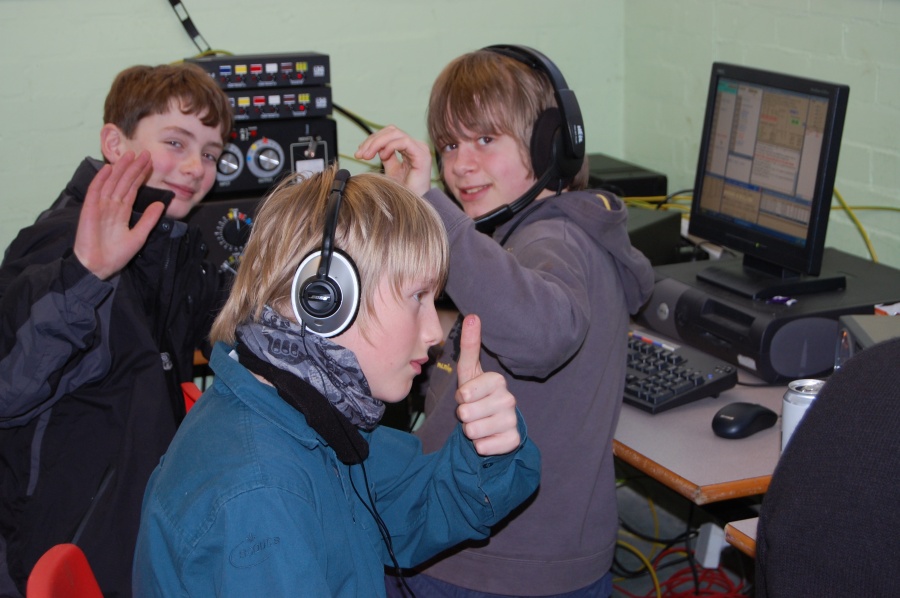
M0XXT SSB Field Day 2009Field days seem to whoosh by in a seamless tirade of bodily abuse that starts in the balls of the feet, grows through your hands and wind blown cheeks before reminding you that you are starving hungry and you’ve only just taken over the driving seat.
A very dissapointed 1012s QSO this  year and we still can’t work out why we lost ground so fast with the other leading stations, even on 80m where we should have held our own. Certainly having a tribander at only 35 feet is a hell of a penalty to have to suffer every year, but why our 40m and 80m runs were not producing the numbers that the other high-flying entrants were managing? I just don’t know. High probably does mean might. Last year’s 1,000 foot entry was very different on the higher bands to this year. Mostly, we were firing right through a heavy forest. I wonder how much attenuation there is in 500 yards of dense oak trees that are about 80 feet tall? Well, you get my drift.
Filtering this year was amazing. We used a second rig as a dedicated 2nd receiver using James’s new Band Pass Filters, made to Bob Henderson’s designs and we had negligable breakthrough. I can’t wait to use the new permanent multi-two station when we have the stub filters in place too.

Anyway, although I’m gutted that we probably didn’t even make the top three, we still had a good time and achieved some learnings too. Contesting for me is about three things, learning, competing or having fun. Ideally, all those things. This year I had all of them but not at the same time. Knowing that we were beaten within 2 hours of the kick off made me push extremely hard, but we just couldn’t catch the leaders. Grrr.

Oh well, next year we’ll be back, stronger, cleverer and with a better strategy.

http://www.m0mcx.co.uk/gallery/index.php?/category/181

Callum, Team Captain.

September 17th, 2009 Posted by admin | Amateur Radio | no comments

Huawei E220 External Antenna Modification

See the high(er)-res pictures here: http://www.m0mcx.co.uk/gallery/index.php?/category/179

Modern USB Data Sticks don’t seem to come with external antenna jacks these days. This is a real shame for geeks like me who want better signals and are prepared to procure external antennas to ensure high quality signals.

This project is to ensure that we can have 24 x 7 comms on the boat this summer without resorting to hanging USB modems out of portholes. Metal, as most people know, shields RF extremely well so external antennas are the only way to go. I have already made the necessary internal IT mods to the boat to ensure we have connectivity with a new Dell machine and a wireless router, shared on one of the ethernet ports. A second ethernet card connects to the router as a client to put the Dell back on the corrrect subnet as the rest of the wireless laptops (which are on the “wrong” side of the router). A spin off to all this is that our Orange Blackberry’s will connect to the router, delivering a UMA connection meaning that we will have at least four devices connected internally. Voice calls will be almost impossible via UMA unless we have a very smart connection.

Learning from a mutual friend of mine currently travelling from Alaska to Japan on his Nordhavn, we will share out our WiFi connection with our convoy and friends who we will meet along the way. And why not :)

Cellular and WiFi marine antennasOf course, I already have a good 2.4Ghz antenna for the reception of WiFi signals and this will remain connected to the Dell’s WiFi card if (and when) we manage to secure a good quality marina WiFi signal but the USB stick will supply almost as good as home broadband, depending on availability. Some people will know that I have a deep knowledge of WiFi security auditing and I will, as a matter of course “test” out the security of most of the WiFi hotspots we happen to come across as part of my learnings. And if you believe that, you’ll believe anything.

Anyway, I digress. What I needed was the facility to have good signal strength to the Huawei E220, hence this successful antenna mod.

If you came here from Google, you will want to know the ins-and-outs. I can tell you this is a genuinely very easy mod if you have prepared all your tools and have an hour to play with. Like all modification projects, the key is not to rush.

First, lever off the protective branded cover. I used a sharp knife to start breaking the sticky seal. Be carefull you don’t cut yourself. It comes off quite easily with a sort of unsticking sound. Ignore the little tab at one end, it’s only a positional tab and doesn’t do anything mechanical.

Next, observe the very small Torx style screw that holds the covers together. Initially, you might find they are covered in a sticky paper washer affair, this is just the remnants of the branded cover. Pick them out with a sharp knife.

Now, even my very tiny, small torx screwdriver didn’t manage to uncrew these torx screws, I reverted to using a tiny jewellers screwdriver which just managed to catch the sides of the Torx screw head and I carefully unscrewed it. I have read that some people have just snapped the case open but I wanted to keep it all in one piece. If you can find a teeny-weeny screwdriver, it is worth trying to get this out.

E220 Antenna Modification E220 Antenna Modification E220 Antenna Modification

Next, I took out the SIM card and put a very large screwdriver blade inside the opening and started to snap all the mechanical catches apart. Within a few seconds, I had this apart - it is not difficult. Just be careful and work steadily. You don’t need to be strong, just work slowly.

You will see when the device is apart, a weird antanna located opposite the USB connector built around some clear perspex type material. Again, this comes off with the same tiny screwdriver you managed to open the case with via the two torx screws each side of the antenna. I suppose if you had to, you could break this antenna off to do this mod but frankly, if you are a technical sort of person, you should have a teeny screwdriver capable of fitting this torx screw. They came out pretty easily.

E220 Antenna Modification E220 Antenna Modification E220 Antenna Modification

For the technical antenna people reading this, I found this antenna really cute. A quarter-wave at 1.9Ghz is around 4cms which is precisely how big the main element is however there seems to be a matching stub or similar very close to the main element. To start with, I thought this was a separate antenna similar to a fan dipole but the jury’s out since this would mean it also operates at around 4 Ghz, way off I think. Upon reflection, the design seems to be a folded monopole fed against the chasis ground - although the smaller antenna next to the main element is a bit weird. If you know how this works, I’d be keen to understand. Please let me know. The only thing I didn’t work out is the soldered ground I used. Is the ground tag that I soldered actually connected to the chassis ground? I don’t know. Perhaps I need to make some checks. If you know, please contact me with details.

Soldering the RG174 was pretty easy and after I had created a cable exit route with a small heated screwdriver that melted the plastic, everything came together. In the end, I didn’t use the torx screw to put it back together. Instead I just used the clips which will mean if I have to maintain this in the future, life will be a little easier.

E220 Antenna Modification

The outcome is good although I have not used this on the right frequency antenna yet. On the boat, I have a dual band cellular antenna which is 60cms long and will display enormous gain (considering a quarter wave is 4 cms). Working through HSDPA specs, I will achieve almost a perfect match with my transmit signal at or around 1.9Ghz and my receive signal, at just under 2.2Ghz should be a fairly easy trip (HSDPA had uplink and downlink frequencies).

My cellular antenna will therefore be transmitting perfectly although receive may be slightly attenuated due to the narrow bandwidth these cellular antennas display.

However, here’s the worst case scenario: Tonight, I used a WiFi antenna as a benchmark and achieved 2 bars using the T Mobile (Huawei provided) software. Considering that a 2.4Ghz antenna is a terrible match, I am happy that this will perform as planned on the boat.

Before I sign off, I hear you ask; “Where did you get the RG174 and matching N-Type”? Seemples; I bought an SMA to N-Type pigtail and cut the SMA off.

All in all, a successful project. I’m very pleased.

(2 days later: I’m currently on the boat connected via this external antenna pigtail to the dual-band cellular antenna, connected at 3.6Mbps. I’m very pleased!)

Callum.

Here, let me help Google find this in the future:

External Antenna Huawei E220

July 23rd, 2009 Posted by admin | Amateur Radio | no comments

More on Narrowboat Design

(This post aimed at our US friends).

NarrowboatI get an email at about once a week from various members of the NordhavnDreamers group asking me more about our narrowboat which we use on the Inland Waterways of the UK. I find myself repeating myself every couple of weeks, so perhaps a high-quality post here will put your taste buds at ease.

Our boat conforms to a 350 year-old 6 foot 10 inch UK canal barge spec. Actually, they were originally 7 feet wide but some locks have subsided by an inch or so over the last couple of hundred years and a 6 foot 10 inch spec has now been agreed.

History is here: http://en.wikipedia.org/wiki/History_of_the_British_canal_system

We have a 50 hp Beta Marine engine driving an 18 inch three blade prop via a 2:1 reduction gearbox on a 70 foot 23 ton boat. It’s made of mild steel, built on half-inch base lowering to a quarter inch thick on the top deck. The engine supplies 12v to our 4 x 110 ah house batteries and one starter battery via a pair of alternators and we also have something called “Travel Power” which is a bloody great big belt-drive alternator, supplying a 5kW 240v mains device at the flick of a switch (again off the main engine). When I flick it on, I normally have to hit the throttle a whisker to compensate. The throttle is “analogue”. We don’t have a wing or a generator but no switch = no Travel Power (and when it’s on, it’s clearly sucking up power from the engine). This is supplemented by a 3kW Victron inverter. This means, we can have the kettle and toaster on in the mornings when I’m driving along and it also means that the inverter thinks it’s seeing Shore Power and drives the charging flat out. I can achieve a battery “float” after about 12 hours solid charging which lasts us about 18 hours when we’re “on the hook” (mostly fridge, freezer, Sat and TVs). Washing machine use is restricted to when we’re moving and Wendy checks I have the Travel Power “on”. We don’t have an anchor (well, we do but only for river emergencies), we just stop whenever we feel like it and enjoy the view, the wildlife, whatever. Of course, sometimes we can stop right in city centres.

The sound proofing is nothing like a Nordhavn, there’s just an inch thick ply panel between the engine and the master bedroom so it makes a bit of a racket. We have an 8hp electric bow thruster which isn’t proportional but it hangs off a really massive battery (I forget the spec) and it’s very loud with the steel sounding like a bunch of cymbals going off. I can reverse quite easily by using the bow thruster as a steering device, as long as I don’t go too quickly. Apparently the bow thrusters should not be used for more than 2 minutes in any hour. Very occasionally, I think I might be getting near the thermal but so far, never have (does it work..? More questions than answers as usual). I don’t have staged throttle controls, I’m either in neutral or I’m revving the engine for power (or in gear too). I would love a two or three stage idle, as per Ken’s (and David’s) 68, but eventually you have to realise that we’re only doing 4 knots here and the shore is normally within about 12 feet(!), so not much can normally go wrong bar ones ego!

Narrowboats, by their very nature have a number of compromises. For instance, the master bed is only a 4 foot 9 inches wide. This means that we get real cosy watching late-night TV or I sleep in the saloon on an extra large double bed pull-down thingy (she kicks me when I start snoring!). 70 feet long is the absolute maximum you can have on the Midlands and Southern Canal systems. Up “north”, they have wide but dumpy locks. This means that to travel absolutely everywhere in the UK, you need a 58 foot regular-width narrowboat. This is too small for us since we have 2 kids, hence the bunkroom with playstations etc and lots of toys (Ken and John would certainly approve!).

Heating is by a) diesel (furnace) Webasto making hot water which is pumped around a skirting board radiator system. Waste engine heat is dumped over the side on a keel cooling section of the hull. I’m currently talking to the yard to salvage the waste heat and dump it back into the living space in the winter (complimenting the Webasto) since it’s pretty silly to dump heat on the one hand and make heat on the other. B) We also have a couple of electric heaters since we have lots of electricity we can use if required (a novelty on UK canal barges by the way). C) We have a log burner. I’ll often stop the boat in the winter by a large oak tree and salvage some wonderful seasoned dry oak which burns long and hot. Condensation in English narrowboats though is a bit of a problem. The portholes, for instance, do not have a thermal barrier between the outside of the brass and the inside. The consequence is that it will act like a cold beer, water will collect and drip. The only way out this problem (and many boat owners know) is to open all the windows and let the heat out! I vicious circle. However, I’m sure I could have paid even more and gotten around this issue with expensive windows, but we only use the boat in the winter for maybe four or five days so it’s really a non-issue.. Maybe our MkII boat will be better (don’t they say that you always have three boats before you get the spec just “right”..?).

We’ve made a few alterations since the main photo-shoot (the kids bunk room is much better now), but it’s still fitted out in the same European and American oak veneer. Apparently over the next 20 years, this wood will darken. Oak-with-narrowboats are very customary in the UK and it’s difficult to get builders to consider anything else.

The helm is outside, on the stern and we have a long brass tiller extension (that we remove when docked - and I have since shaved off my Mohawk!):

http://www.m0mcx.co.uk/gallery/picture.php?/2952/category/173

and

http://www.m0mcx.co.uk/gallery/picture.php?/2943/category/173

Various construction photos start here:

http://www.m0mcx.co.uk/gallery/picture.php?/2799/category/163

Last year, we went to London from Birmingham (and back) on a four-week cruise. The photo shoot is here:

http://www.m0mcx.co.uk/gallery/index.php?/category/175

Sorry for such a long post.

Cheers,

Callum.
 

June 16th, 2009 Posted by admin | Amateur Radio | no comments

Narrowboat Design

A couple of years ago, I designed a narrowboat using Visio, down to the inch. Visio is cooller than you imagine and can be used like AutoCad as a 2d drawing tool (although AutoCad can do much more). I designed many layouts until I came across the standard called the “floating cottage” design. I had this design made for us. In the UK, narrowboats are only 6 feet 10 inches wide, however it’s amazing how much you can squeeze in.

Narrowboat Design

My friends in the USA can’t imagine what it’s like to travel on the UKs inland waterways where everything was originally designed for a 7 foot width. Canal travelling in the UK is a sociable activity and we meet lots of people every day. Often the locks are double width (14 feet) which means we will share a lock with another boat and their crew. Locks are often in “flights” which means we’ll get a few in a row. The ladies tend to work the lock paddles and gates (with the kids) whilst the men tend to stand on the back of their boats and talk turkey to each other.

I am amazed at how detailed some men can talk about the differences between such esoteric nonsense technical drivel. Many are consumed with amazement at all my antennas. Narrowboaters haven’t worked out yet that they can improve their cellphone or wifi with an external marine-grade antenna.

At the end of the day, the family all comes back together and we share a bottle of wine and discuss all the people we’ve met that day. It is very amusing.

Of course, we also get lots of onlookers. They are called “gongoozlers”. These onlookers can be very funny and they ask lots of questions. Many think we might live on the boat permanently and that we’re some kind of pre-historic or romantic throwback to the canal trade. Others think we’ve hired the boat for a day out. Many are very envious of the laid-back life-style of the canal boat holiday feel. Even funnier, some think that my 28 foot HF SSB antenna (ham vertical antenna) is a sail-mast. Great fun!

Here’s some pics:

Cheers, Callum.

June 7th, 2009 Posted by admin | Amateur Radio | no comments

MegaLoop Antenna

XXT Meage LoopI’m currently writing an article outlining the characteristics of the Mega Loop antenna we use for Dorridge Scouts. If you would like a preview of this white-paper, please let me know.

The XXT Mega Loop is the name given for the application of a horizontally mounted delta-loop that has known gain dependant on wavelength size and height above ground.

At quarter wavelength above ground and above, Mega-Loops start exhibiting gain that is proportional to its wavelength and height. A whole series of articles is currently being written by the author, however for the time being, these few articles may help you determine how we operate the Mega-Loop at Dorridge Scout Group HQ.

More information can be found at the following links:

The basic 80m loop:

Firing supports over trees:

The 160m Loop

Some photos of our implimentation of our Mega Loop can be found here:


May 31st, 2009 Posted by admin | Amateur Radio | no comments

Concept Nordhavn 63 Trawler Yacht

I had immense fun the other day in Paint Shop Pro grafting on the flying bridge of a Nordhavn 60 onto the new Nordhavn 63. For those in the “know”, the 63 has only recently been announced by Nordhavn and I’m sure their designer might well have a flying bridge up his sleeve, I just thought I’d beat him to it! See the 63 here: http://www.nordhavn.com/63/

Post Script: The N63 will never be built with a fly-bridge. It would apparently make the height over the top. So this remains just a bit of fun. Don’t even ask!
Nordhavn Concept 63 Fly Bridge

May 29th, 2009 Posted by admin | Amateur Radio | no comments

How to make an electric fence for chickens

A number of regular readers have been wondering when my next update was to be uploaded. Sorry guys, I’ve been snowed under, mainly with the arrival of four chickens. This is Wendy’s new pet project to deliver about 1,200 fresh eggs every year. I’ve no idea how we will manage chickens whilst we’re on the boat other than the fact that there’s a place near Tamworth where you can take your chickens and put them “on holiday”. Boarding for chickens! Whatever next.

To keep them safe, I have built a one-meter (three foot) fence out of 2×2 wooden postswith 2 inch square galvanised live-stock wire. The chicken coop (house?) was made from a small, single bicycle shed from B&Q (home-improvement store to my US friends!) at a deal price of £83. A few sections of spare timber later and the whole things was a tidy chicken house complete with a fold-down rampart, a-la-English Castle style. Very neat.

The first night, looking for somewhere to bed down for the night, the chickens flew over the fence! A few minutes later and after much laughter, we had ushered them into their new home successfully, however the second night they did the same. By the fourth night, Wendy was becoming slightly impatient since she just wanted them to go back into their little house without prompting. I mean, how the hell are we to get someone to baby-sit these creatures if every bloody night, they have to round the blighters up off the lawn?

Electric Fence EnergiserTechnology came to the rescue. I found on ebay a most excellent toy, a 12 volt electric fence energiser that delivers 1,200 volts in 1 second intervals as well as an instant shock the moment you touch it. All I had to do was design the fence so that only the top was electrified (live). This was slightly complex since to make any sort of circuit, one needs a live and an earth. I ran a new earth line right across the top of the fence posts as the earth and then just above that (about an inch), I ran a clean live wire from the energiser, insulated from earth. Bottom line is that tonight, they finally all went into the house, but not before they had most enthusiastic sing-along as they tried in turn to do their usual trick of flying (jump-flapping?) up to the fence. Every second, the energiser blasted out a little wiggle of electricity and each time, the chicken’s feet got a little blast and they squawked (loudly) before jumping back down to the ground. Well, in the main that’s what happened but two of the birds jumped down wrong side, but we’ve “cured” them without resorting to 6-foot fencing which would look out of place in out trim and tidy English lawn.

Cheers, Callum!

May 22nd, 2009 Posted by admin | Amateur Radio | no comments

Easter 2009 Narrowboat Trip

Stratford Upon Avon Canal MapWith the kids having a couple of weeks off, we thought up a new trip and ventured from Calcutts to Stratford. We didn’t make it all the way back and have dropped the boat down by Knowle locks for a few days whilst I work out when I’m going to take it “home”.

The weather was pretty kind to us, managing to rain mostly at night. When the sun did come out, we had fluffy white clouds and large gaps of blue sky. A very English weather for a very English part of the countryside. It must have been relatively sunny since I’ve clearly caught the sun on my face. I have a healthy glow without the radiation treatment that they get “down under” when exposing bare skin to sunshine.

We managed to squeeze in three main meals at three different well-known canal pubs in the first three days of the tip. All come recommended; The Waterman at the top of the Hatton Flight, the Boot at Lapworth and ther Fleur de Lys at Lowsonford. Actually, it all gets mixed up here because one day I managed to squeeze in 6 pints of Guiness spread across two pubs and for the life of me, I can’t remember which one and which day! Yes, I remember now.. the Boot for lunch and the Fleur de Lys for dinner. Thirsty work being a narrowboat driver. We were also lucky to meet Mike and Jackie again on the Narrowboat Wordsworth. A cracking couple and we love them to bits!

Although this trip is full of locks and I counted nearly 75 just to get there, it didn’t seem too bad, although Wendy’s elbow seems to flare up on the really big days. Stratford locks are tough for little ones too. You would expect them to be soft like the Oxford but someone forgot to grease the lot for the last 100 years. I was hauled off a number of times to lend a hand and my woolly mammoth strength to the padddles - or the gates. However a very pleasant journey all the same. I did find the Stratford canal locks tighter than the Oxford too. They are certainly a whisker smaller and a couple of times, I nearly got stuck. I’m in need of a bit of paint now since the rubbing strakes are down to Jonathon Wilson’s bare steel (sorry Pal!).

Ian Lockkeeper from British WaterwasyWe had one incident with the last lock gate on the last lock on the Stratford. The bloody gate wouldn’t close completely. I sat there in the boat waiting for Wendy to open the gate and nothing. I shouted across the pound what was the problem. She just said it filling slowly. Clearly there was an issue though since it just wouldn’t fill and when I decided to pull over, I was grounding - an indication that we’d nearly emptied the damned pound! A good old-fashioned leap from me and I was on dry land, investigating the issue. Yes, the last lock gate was jammed open and water was pouring through it. We’d never be able to fill the lock, it was like trying to run a bath with the plug out. A bystander came up with the idea of flushing the lock. In other words, try and fill it but with the front gate wide open for a few seconds. That might shift what ever it was. We tried this and then I realised out boat was worse off, sitting at an angle dry land almost, with the keel exposed - I could even see the propeller!

After a bit of hydromatics (new word, I just made it up!), we agreed to call British Waterways and they turned up fairly rapidly to see what they could do. A longer wait and mega-man Ian turns up. Blimey, he’s a strapping bloke this Ian! Massive. He ends up in the drink with his dry suit on and finds a log jamming the gate. Eventually we’re on our way again.

So, after three days in Stratford, moored next to Mike and Jackie - and having dinner with Marcus and Tracey and the following night with John and Lutty, we untied and went on our way. However not only had my mascot duck been kidnapped (which is rather funny and I got it back) we had to endure a bloody racket from some Univerity students who had drunk far too much. They were still dancing on the roof at 4:30am in the morning. One even went to sleep up there. We followed them home for a while back up the lock system. They were still partying!

Just before leaving on Sunday, we managed to grab a quick pump-out, fill with water and cruised up the Avon for 20 minutes. Finally at about 2:00pm, we made our way through the first dozen or so locks, leaving us with one big push on Easter Monday where we managed to get all the way to Knowle locks.

In terms of engineering issues this trip, the bloody toilet seems to get stuck on every second flush or so. I’ve no idea why. I did find some wire shoved up the kitchen sink drain-away pipe, there was some plastic bag ties pushed hard up the pipe. I’m wondering if the breather pipe for the black water system might have been tampered with too which means that maybe the tank gets put under pressure and it doesn’t want to accept any more debris until the system has equalised. I have just thought that first flush of the day normally works. I think I’m on to something here. I’ll work out a way of checking this.

There’s still an odour from the master bedroom. This is where we had the leak last year. It dried out but still causes this stale smell. I wonder how long it will keep up?

I want a battery management information system. I have little idea about power consumption because I don’t have a power meter. Victron Energy do a really cool meter called a BMV-600 with is just ideal. It has a programable relay so there’s some interesting thoughts working in my head about starting the engine automatically if the house batteries start to run dry. Watch this space.

Pictures: http://www.m0mcx.co.uk/gallery/index.php?/category/173

Cheers for now,

Callum (Wendy and the kids).

April 15th, 2009 Posted by admin | Amateur Radio | no comments

Quadrifilar wound toroids (and Coax Cable stub filters)

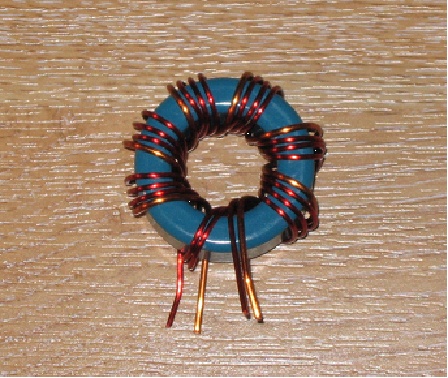
quadrifilar wound toroidJames (M3YOM) has just emailed me after discovering something worse than fitting 90 or so PL259s last week; it’s winding quadrifilar wound toroids. Pictured is a completed L1 winding for the 40m filter. He says that it’s a T130-0 core with 7 quadrifilar windings which should give around 3.96uH and there are two in the filter box he’s making from a kit supplied by Bob Henderson.
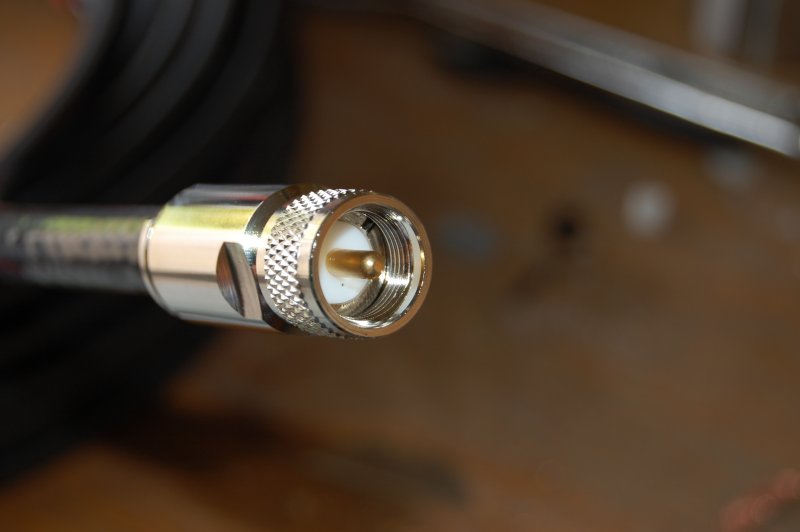
Since James took on the job of producing a fully filtered Multi-Two station, he’s soldered nearly 100 PL259s and not one of them was faulty on the day. Good job OM!

James, the wire looks like that stuff we made the MegLoop with, is it?

James says:

“It’s not the megaloop wire, the Lo-Z winding (yellow wire) is 1.25mm solderable enamelled wire and the Hi-Z winding (Red wire) is 1mm solderable enamelled wire. The enamel is designed to burn away at low temperature so you can solder it directly without the need for striping it back first.

Incidentally, Bob’s callsign is 5B4AGN (he used to be a G3 before he moved) ”

Bob, I’m sorry you used to be a G3. You should know that I’m forever poking serious fun at G3s, as they poke fun at M3s. Maybe you and I can form a truce and make the world a happier place?

73 all, particularly my new G3 friends.

Callum.


March 31st, 2009 Posted by admin | Amateur Radio | no comments